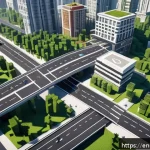
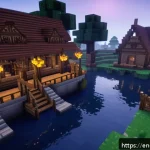
Ever feel like you’ve reached a creative plateau in Minecraft? I totally get that! After spending countless hours meticulously crafting everything from rustic villages to grand medieval fortresses, I found myself longing for something truly next-level.
That’s when I plunged headfirst into the exhilarating realm of futuristic builds, and honestly, it utterly transformed my approach to the game. Seeing how fellow players are pushing boundaries with incredible designs, integrating cutting-edge Redstone automation, and even drawing inspiration from AI-driven architecture has opened up a whole new universe of possibilities.
If you’re ready to ditch the ordinary and construct awe-inspiring structures that belong in tomorrow’s world, then you’re in for an absolute treat. Let’s explore the future of Minecraft building and uncover all the secrets together!
Beyond Blocks: Crafting Tomorrow’s Landscapes

Breaking Free from Tradition
Ever feel like you’ve hit a creative wall in Minecraft? That’s when I plunged headfirst into the exhilarating realm of futuristic builds, and honestly, it utterly transformed my approach to the game. It wasn’t just about stacking blocks anymore; it was about visualizing structures that didn’t quite exist, thinking about flow, purpose, and how light would play off sharp angles and sleek surfaces. You really have to break free from traditional building mindsets. I’ve found that starting with a clear, almost abstract concept in your head, like ‘cyberpunk city’ or ‘interstellar outpost,’ helps set the stage. It’s about envisioning the future and then translating that into the blocky world we all love.
Envisioning the Unseen
Don’t be afraid to experiment with unusual block combinations – often, the unexpected pairings are what give your builds that truly unique, cutting-edge aesthetic. Trust me, stepping out of your comfort zone here is where the magic happens; it’s where you genuinely start to develop your own signature futuristic style. This journey has not only improved my building skills but has also reignited my passion for Minecraft in ways I never thought possible. Let’s explore the future of Minecraft building and uncover all the secrets together!
The Art of Sci-Fi Symmetry: Building with Intent
Dynamic Balance vs. Mirror Images
When you’re designing futuristic structures, symmetry often takes on a slightly different role than in traditional builds. While perfect mirrored halves can work for grand, imposing structures, I’ve found that asymmetrical elements can often add a dynamic, advanced feel. Think about modern architecture; it frequently plays with balance rather than strict mirror images. It’s less about perfect reflections and more about creating a sense of sophisticated, almost organic balance where different parts complement each other without being identical. This allows for a more fluid and less rigid aesthetic, which often feels more cutting-edge and less conventional. It truly makes your builds stand out and feel like they’re from an era far beyond our own.
Form Follows Futuristic Function
What truly defines a futuristic build is not just its shape but its intentionality. Every curve, every line, every jutting piece of glass or metal needs to feel like it serves a purpose, even if that purpose is purely aesthetic. I always ask myself: “Why is this here? What function does it serve in this future world?” This thought process pushes me to think beyond mere decoration and truly integrate form and function. This attention to detail is what makes a build feel cohesive and believable, rather than just a collection of cool-looking parts. My personal approach often involves sketching out rough ideas beforehand, focusing on broad shapes and how different sections might connect, rather than getting bogged down in block-by-block details too early. It’s a bit like being an architect for a parallel dimension, designing for a society we can only imagine. The more you immerse yourself in that mindset, the more incredible your creations become.
Redstone Reimagined: Powering Your Futuristic Visions
Automation as Aesthetic
Oh, Redstone. For years, I mostly used it for basic doors or simple farms, but when I ventured into futuristic builds, it became absolutely indispensable. It’s not just about automating things anymore; it’s about integrating technology seamlessly into the very fabric of your structures. Imagine automated sliding doors that retract into the floor with a satisfying hiss, hidden lighting systems that pulse to a beat, or even complex teleportation hubs that whisk you away to different sections of your grand complex. I’ve spent countless hours tinkering with circuits, learning about compact designs, and figuring out how to hide all the wires to maintain that sleek, clean aesthetic. My biggest breakthrough came when I started thinking of Redstone as an integral design element, not just an afterthought. The way a mechanism silently operates or a hidden light clicks on can add so much to the futuristic vibe.
Mastering Hidden Mechanics
For instance, I built a modular housing unit where entire walls would slide open to reveal different rooms, all controlled by a single button. It felt incredibly satisfying to see my vision come to life with a satisfying ‘thunk’ and whir. If you’re new to advanced Redstone, don’t be intimidated; start small with automated entrances or simple light controls, and gradually work your way up. There are tons of fantastic tutorials out there, and the Minecraft community is always eager to share compact designs and clever solutions. The sense of accomplishment when a complex system finally clicks and performs exactly as you envisioned is truly unparalleled. It adds a layer of interactivity and realism to your futuristic structures that simply can’t be achieved with static builds alone, making your world feel truly alive and ahead of its time.
Illumination Innovation: Lighting Up the Future
Beyond Basic Brightness
Lighting in futuristic builds isn’t just about preventing mob spawns; it’s a crucial design element that sets the mood, highlights architectural features, and creates an immersive atmosphere. Forget torches and glowstone in plain sight! I’ve experimented with hidden light sources, often embedding sea lanterns or glowstone *behind* glass or concrete to give off a diffused, ambient glow. This technique allows for beautiful, even lighting without any visible light blocks, maintaining that super clean, modern look. Thinking about different light temperatures is also key. For a cold, clinical sci-fi lab, I might opt for stark, bright white lighting using Conduit or Shroomlight. But for a more inviting, high-tech lounge area, I’d lean towards warmer hues, perhaps utilizing end rods or even tinted glass with hidden light blocks.
Dynamic Lighting for Drama
One of my favorite tricks is using strategically placed Redstone lamps that can be toggled on and off, creating dynamic lighting sequences that truly make a build feel alive and reactive. Imagine a pulsating light grid in a factory, or a gentle fade-in and fade-out in a luxury apartment. I remember spending an entire afternoon just perfecting the lighting scheme for a futuristic biodome, wanting to mimic natural light cycles from dawn to dusk. The result? A stunning play of light and shadow that truly brought the structure to life and captivated anyone who visited. It’s these small, thoughtful details in lighting that really elevate a build from good to absolutely breathtaking, making your visitors feel like they’ve stepped into another world. Experimenting with color, intensity, and sequencing can transform a static space into a vibrant, living environment.
Material Matters: Textures for a New Era
The Modern Block Palette
Choosing the right blocks for your futuristic builds is half the battle, and honestly, it’s one of the most exciting parts! Gone are the days of just cobblestone and wood. We have such an incredible palette to work with now. I’ve personally fallen in love with blocks like smooth quartz, white concrete, light grey concrete, and polished blackstone for their sleek, clean lines. They just scream “future” to me, offering a pristine and often stark base that you can then build upon. Other favorites include polished deepslate, which has a wonderful dark, metallic sheen, and even crying obsidian for those truly alien or energy-infused designs. Don’t underestimate the power of contrast; sometimes a simple black and white palette can be incredibly effective.
Unexpected Combinations, Stunning Results
But it’s not just about using shiny, new blocks; it’s about how you combine them. Mixing a base of dark prismarine with strips of sea lanterns can create an incredible oceanic sci-fi vibe, while using stripped dark oak logs as accents on a concrete wall can add a surprising touch of warmth to an otherwise sterile environment. I’ve found that experimenting with blocks I wouldn’t normally use in traditional builds often yields the most unique and satisfying results. Sometimes, even simple blocks like iron blocks or even dark terracotta can be repurposed to create industrial or alien textures. It’s all about breaking free from conventions and letting your imagination run wild with the current block library. The game has given us so much to work with, it’s a shame not to explore every corner of its blocky potential! Here’s a quick look at some of my go-to blocks for various futuristic aesthetics:
| Aesthetic Type | Primary Blocks | Accent Blocks | Key Features |
|---|---|---|---|
| Sleek & Minimalist | White Concrete, Smooth Quartz, Light Grey Concrete | Blackstone, Dark Glazed Terracotta, Polished Deepslate | Clean lines, strong contrast, hidden lighting |
| Industrial Cyberpunk | Gray Concrete, Iron Blocks, Dark Prismarine | Redstone Blocks, Stripped Dark Oak, Oxidized Copper | Gritty textures, exposed pipes, visible mechanisms |
| Organic Sci-Fi | Warped/Crimson Blocks, Mossy Stone Bricks, Glowstone | Sea Lanterns, Shroomlight, Crying Obsidian | Curving forms, natural light sources, otherworldly feel |
| High-Tech Luxury | Blackstone, Dark Oak Wood, Smooth Stone | Gold Blocks, Shulker Boxes (hidden), Light Blue Stained Glass | Opulent materials, ambient lighting, complex automation |
Drawing Inspiration from the Digital Frontier
Real-World Future-Forward Designs
If you’re ever feeling stuck for ideas, trust me, the internet is an endless wellspring of inspiration for futuristic builds. I constantly find myself scrolling through art stations, concept art sites, and even architectural magazines, looking for interesting shapes, structural designs, and material combinations. Don’t limit yourself to just Minecraft-specific content either! Think about real-world futuristic architecture you see in cities like Dubai or Singapore, sci-fi movies like Blade Runner or Tron, video games like Cyberpunk 2077 or Mass Effect, and even AI-generated art. Real-world structures often demonstrate incredible structural integrity and innovative material usage that can be translated into Minecraft’s blocky world with a bit of creative thinking. I even look at futuristic vehicle designs for inspiration on curves and aerodynamics.
AI and Game Concepts: A Creative Catalyst
I’ve personally found incredible concepts by looking at how AI algorithms are being used to generate architectural designs – they often come up with forms that a human might not initially consider, pushing the boundaries of conventional design. It’s not about copying directly, but about absorbing the essence of what makes something look “futuristic” and then adapting that to Minecraft’s unique block-based medium. I keep a dedicated folder of screenshots and concept art that catches my eye, referring back to it whenever I hit a creative wall. Sometimes, just seeing a new way a window is framed or how two materials are joined can spark an entire build idea. It’s like having a team of visionary architects constantly feeding you ideas, opening up new perspectives you might not have considered on your own. Dive into these resources, and you’ll quickly find your own well of creativity overflowing.
Bringing Your Vision to Life: Practical Tips
Planning Your Mega-Structure
Alright, so you’ve got your futuristic vision, but how do you actually make it happen without tearing your hair out? From my own experience, planning is absolutely crucial. I used to just dive in, and while that can work for smaller projects, for anything ambitious, you need a blueprint. Even a rough sketch on paper or a quick build in creative mode can save you hours of rework. Before placing a single block in survival, I often create a scale model in a creative test world. This allows me to experiment with different dimensions, block palettes, and even Redstone layouts without the pressure of resource gathering. It’s like a sandbox for your sandbox, letting you iron out kinks before committing. Believe me, a few extra minutes of planning can save you hours of frustration down the line, especially when dealing with complex, multi-layered designs.
Leveraging Tools and Community Feedback
Another pro-tip: build in layers. Start with the basic shape, then add details, then refine. Trying to perfect everything at once is a recipe for burnout. And don’t be afraid to use WorldEdit or similar tools if you’re on Java Edition; they can be absolute game-changers for large-scale, symmetrical structures, saving you tons of time on repetitive tasks. I often build a small, detailed section by hand, then use WorldEdit to replicate it, making sure it maintains that organic, human-built feel rather than looking rigidly copied. Also, get feedback! Show your works-in-progress to friends or online communities. A fresh pair of eyes can spot things you’ve overlooked or offer brilliant suggestions you hadn’t considered. It’s a collaborative journey, even if you’re the one placing every block. The Minecraft building community is incredibly supportive and always eager to share tips and constructive criticism, which can truly elevate your projects to new heights.
The Future is Now: Pushing Minecraft’s Boundaries
Unleash Your Inner Architect
Honestly, the most exciting part about building futuristic structures in Minecraft is the sheer freedom it offers. There are no historical precedents to follow, no traditional architectural rules to rigidly adhere to. It’s a canvas for pure imagination, a space where you can truly push the boundaries of what’s possible within the game. I’ve seen players integrate entire mini-games within their futuristic bases, create elaborate automated cities, and even design structures that feel like they’ve been pulled straight from a high-budget sci-fi film. This style of building truly lets you unleash your inner architect, allowing you to create worlds and structures that are limited only by your own creativity. The joy of seeing a truly unique vision come to life in blocks is an unparalleled feeling, and it keeps me coming back to Minecraft, year after year, always eager for the next challenge.
Continuous Innovation and Discovery
The key is to keep experimenting and never stop learning. Each new block added to the game, each new Redstone component, offers fresh opportunities to innovate. I always try to think about how these new additions can be incorporated into a futuristic context, adding another layer of complexity or aesthetic appeal to my builds. This mindset not only keeps my own building fresh and exciting but also inspires me to see what incredible creations others are coming up with. It’s a journey of continuous discovery, and honestly, the only limit is your own creativity and willingness to try something different. So, grab your pickaxe and start building tomorrow, today! Don’t be afraid to fail, iterate, and learn from every block you place. The future of Minecraft building is bright, and you’re a part of shaping it.
Beyond Blocks: Crafting Tomorrow’s Landscapes
Breaking Free from Tradition
Ever feel like you’ve hit a creative wall in Minecraft? That’s when I plunged headfirst into the exhilarating realm of futuristic builds, and honestly, it utterly transformed my approach to the game. It wasn’t just about stacking blocks anymore; it was about visualizing structures that didn’t quite exist, thinking about flow, purpose, and how light would play off sharp angles and sleek surfaces. You really have to break free from traditional building mindsets. I’ve found that starting with a clear, almost abstract concept in your head, like ‘cyberpunk city’ or ‘interstellar outpost,’ helps set the stage. It’s about envisioning the future and then translating that into the blocky world we all love.
Envisioning the Unseen
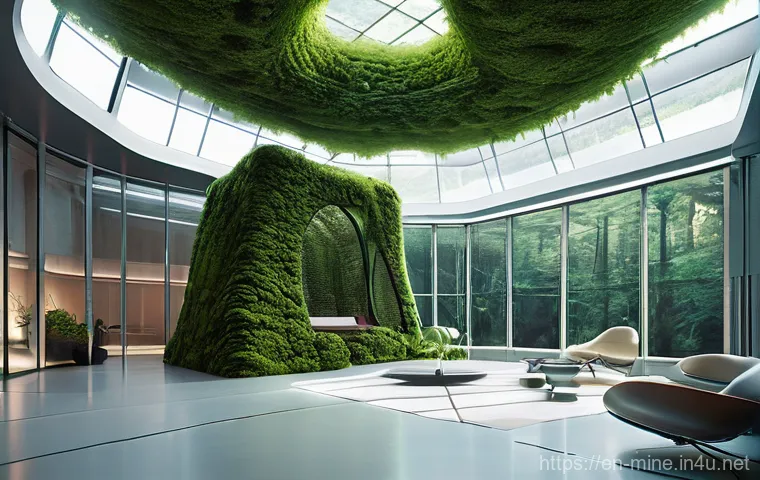
Don’t be afraid to experiment with unusual block combinations – often, the unexpected pairings are what give your builds that truly unique, cutting-edge aesthetic. Trust me, stepping out of your comfort zone here is where the magic happens; it’s where you genuinely start to develop your own signature futuristic style. This journey has not only improved my building skills but has also reignited my passion for Minecraft in ways I never thought possible. Let’s explore the future of Minecraft building and uncover all the secrets together!
The Art of Sci-Fi Symmetry: Building with Intent
Dynamic Balance vs. Mirror Images
When you’re designing futuristic structures, symmetry often takes on a slightly different role than in traditional builds. While perfect mirrored halves can work for grand, imposing structures, I’ve found that asymmetrical elements can often add a dynamic, advanced feel. Think about modern architecture; it frequently plays with balance rather than strict mirror images. It’s less about perfect reflections and more about creating a sense of sophisticated, almost organic balance where different parts complement each other without being identical. This allows for a more fluid and less rigid aesthetic, which often feels more cutting-edge and less conventional. This dynamic approach truly makes your builds stand out and feel like they’re from an era far beyond our own, offering a visual intrigue that keeps observers captivated.
Form Follows Futuristic Function
What truly defines a futuristic build is not just its shape but its intentionality. Every curve, every line, every jutting piece of glass or metal needs to feel like it serves a purpose, even if that purpose is purely aesthetic. I always ask myself: “Why is this here? What function does it serve in this future world?” This thought process pushes me to think beyond mere decoration and truly integrate form and function. This attention to detail is what makes a build feel cohesive and believable, rather than just a collection of cool-looking parts. My personal approach often involves sketching out rough ideas beforehand, focusing on broad shapes and how different sections might connect, rather than getting bogged down in block-by-block details too early. It’s a bit like being an architect for a parallel dimension, designing for a society we can only imagine. The more you immerse yourself in that mindset, the more incredible your creations become, taking on a life of their own.
Redstone Reimagined: Powering Your Futuristic Visions
Automation as Aesthetic
Oh, Redstone. For years, I mostly used it for basic doors or simple farms, but when I ventured into futuristic builds, it became absolutely indispensable. It’s not just about automating things anymore; it’s about integrating technology seamlessly into the very fabric of your structures. Imagine automated sliding doors that retract into the floor with a satisfying hiss, hidden lighting systems that pulse to a beat, or even complex teleportation hubs that whisk you away to different sections of your grand complex. I’ve spent countless hours tinkering with circuits, learning about compact designs, and figuring out how to hide all the wires to maintain that sleek, clean aesthetic. My biggest breakthrough came when I started thinking of Redstone as an integral design element, not just an afterthought. The way a mechanism silently operates or a hidden light clicks on can add so much to the futuristic vibe, almost making the build feel intelligent.
Mastering Hidden Mechanics
For instance, I built a modular housing unit where entire walls would slide open to reveal different rooms, all controlled by a single button. It felt incredibly satisfying to see my vision come to life with a satisfying ‘thunk’ and whir. If you’re new to advanced Redstone, don’t be intimidated; start small with automated entrances or simple light controls, and gradually work your way up. There are tons of fantastic tutorials out there, and the Minecraft community is always eager to share compact designs and clever solutions. The sense of accomplishment when a complex system finally clicks and performs exactly as you envisioned is truly unparalleled. It adds a layer of interactivity and realism to your futuristic structures that simply can’t be achieved with static builds alone, making your world feel truly alive and ahead of its time. Seriously, once you get the hang of it, you’ll wonder how you ever built without it.
Illumination Innovation: Lighting Up the Future
Beyond Basic Brightness
Lighting in futuristic builds isn’t just about preventing mob spawns; it’s a crucial design element that sets the mood, highlights architectural features, and creates an immersive atmosphere. Forget torches and glowstone in plain sight! I’ve experimented with hidden light sources, often embedding sea lanterns or glowstone *behind* glass or concrete to give off a diffused, ambient glow. This technique allows for beautiful, even lighting without any visible light blocks, maintaining that super clean, modern look. Thinking about different light temperatures is also key. For a cold, clinical sci-fi lab, I might opt for stark, bright white lighting using Conduit or Shroomlight. But for a more inviting, high-tech lounge area, I’d lean towards warmer hues, perhaps utilizing end rods or even tinted glass with hidden light blocks. It’s all about intentionality and creating the desired emotional response in your observers.
Dynamic Lighting for Drama
One of my favorite tricks is using strategically placed Redstone lamps that can be toggled on and off, creating dynamic lighting sequences that truly make a build feel alive and reactive. Imagine a pulsating light grid in a factory, or a gentle fade-in and fade-out in a luxury apartment. I remember spending an entire afternoon just perfecting the lighting scheme for a futuristic biodome, wanting to mimic natural light cycles from dawn to dusk. The result? A stunning play of light and shadow that truly brought the structure to life and captivated anyone who visited. It’s these small, thoughtful details in lighting that really elevate a build from good to absolutely breathtaking, making your visitors feel like they’ve stepped into another world. Experimenting with color, intensity, and sequencing can transform a static space into a vibrant, living environment that feels incredibly cutting-edge.
Material Matters: Textures for a New Era
The Modern Block Palette
Choosing the right blocks for your futuristic builds is half the battle, and honestly, it’s one of the most exciting parts! Gone are the days of just cobblestone and wood. We have such an incredible palette to work with now. I’ve personally fallen in love with blocks like smooth quartz, white concrete, light grey concrete, and polished blackstone for their sleek, clean lines. They just scream “future” to me, offering a pristine and often stark base that you can then build upon. Other favorites include polished deepslate, which has a wonderful dark, metallic sheen, and even crying obsidian for those truly alien or energy-infused designs. Don’t underestimate the power of contrast; sometimes a simple black and white palette can be incredibly effective, lending a sophisticated air to your creations. It’s all about exploring textures and how they play off each other.
Unexpected Combinations, Stunning Results
But it’s not just about using shiny, new blocks; it’s about how you combine them. Mixing a base of dark prismarine with strips of sea lanterns can create an incredible oceanic sci-fi vibe, while using stripped dark oak logs as accents on a concrete wall can add a surprising touch of warmth to an otherwise sterile environment. I’ve found that experimenting with blocks I wouldn’t normally use in traditional builds often yields the most unique and satisfying results. Sometimes, even simple blocks like iron blocks or or even dark terracotta can be repurposed to create industrial or alien textures. It’s all about breaking free from conventions and letting your imagination run wild with the current block library. The game has given us so much to work with, it’s a shame not to explore every corner of its blocky potential! Here’s a quick look at some of my go-to blocks for various futuristic aesthetics:
| Aesthetic Type | Primary Blocks | Accent Blocks | Key Features |
|---|---|---|---|
| Sleek & Minimalist | White Concrete, Smooth Quartz, Light Grey Concrete | Blackstone, Dark Glazed Terracotta, Polished Deepslate | Clean lines, strong contrast, hidden lighting |
| Industrial Cyberpunk | Gray Concrete, Iron Blocks, Dark Prismarine | Redstone Blocks, Stripped Dark Oak, Oxidized Copper | Gritty textures, exposed pipes, visible mechanisms |
| Organic Sci-Fi | Warped/Crimson Blocks, Mossy Stone Bricks, Glowstone | Sea Lanterns, Shroomlight, Crying Obsidian | Curving forms, natural light sources, otherworldly feel |
| High-Tech Luxury | Blackstone, Dark Oak Wood, Smooth Stone | Gold Blocks, Shulker Boxes (hidden), Light Blue Stained Glass | Opulent materials, ambient lighting, complex automation |
Drawing Inspiration from the Digital Frontier
Real-World Future-Forward Designs
If you’re ever feeling stuck for ideas, trust me, the internet is an endless wellspring of inspiration for futuristic builds. I constantly find myself scrolling through art stations, concept art sites, and even architectural magazines, looking for interesting shapes, structural designs, and material combinations. Don’t limit yourself to just Minecraft-specific content either! Think about real-world futuristic architecture you see in cities like Dubai or Singapore, sci-fi movies like Blade Runner or Tron, video games like Cyberpunk 2077 or Mass Effect, and even AI-generated art. Real-world structures often demonstrate incredible structural integrity and innovative material usage that can be translated into Minecraft’s blocky world with a bit of creative thinking. I even look at futuristic vehicle designs for inspiration on curves and aerodynamics, figuring out how those sleek lines can be mimicked in blocks.
AI and Game Concepts: A Creative Catalyst
I’ve personally found incredible concepts by looking at how AI algorithms are being used to generate architectural designs – they often come up with forms that a human might not initially consider, pushing the boundaries of conventional design. It’s not about copying directly, but about absorbing the essence of what makes something look “futuristic” and then adapting that to Minecraft’s unique block-based medium. I keep a dedicated folder of screenshots and concept art that catches my eye, referring back to it whenever I hit a creative wall. Sometimes, just seeing a new way a window is framed or how two materials are joined can spark an entire build idea. It’s like having a team of visionary architects constantly feeding you ideas, opening up new perspectives you might not have considered on your own. Dive into these resources, and you’ll quickly find your own well of creativity overflowing and your designs becoming truly unique.
Bringing Your Vision to Life: Practical Tips
Planning Your Mega-Structure
Alright, so you’ve got your futuristic vision, but how do you actually make it happen without tearing your hair out? From my own experience, planning is absolutely crucial. I used to just dive in, and while that can work for smaller projects, for anything ambitious, you need a blueprint. Even a rough sketch on paper or a quick build in creative mode can save you hours of rework. Before placing a single block in survival, I often create a scale model in a creative test world. This allows me to experiment with different dimensions, block palettes, and even Redstone layouts without the pressure of resource gathering. It’s like a sandbox for your sandbox, letting you iron out kinks before committing. Believe me, a few extra minutes of planning can save you hours of frustration down the line, especially when dealing with complex, multi-layered designs where a single misplaced block can throw off an entire section.
Leveraging Tools and Community Feedback
Another pro-tip: build in layers. Start with the basic shape, then add details, then refine. Trying to perfect everything at once is a recipe for burnout. And don’t be afraid to use WorldEdit or similar tools if you’re on Java Edition; they can be absolute game-changers for large-scale, symmetrical structures, saving you tons of time on repetitive tasks. I often build a small, detailed section by hand, then use WorldEdit to replicate it, making sure it maintains that organic, human-built feel rather than looking rigidly copied. Also, get feedback! Show your works-in-progress to friends or online communities. A fresh pair of eyes can spot things you’ve overlooked or offer brilliant suggestions you hadn’t considered. It’s a collaborative journey, even if you’re the one placing every block. The Minecraft building community is incredibly supportive and always eager to share tips and constructive criticism, which can truly elevate your projects to new heights and push your creativity further.
The Future is Now: Pushing Minecraft’s Boundaries
Unleash Your Inner Architect
Honestly, the most exciting part about building futuristic structures in Minecraft is the sheer freedom it offers. There are no historical precedents to follow, no traditional architectural rules to rigidly adhere to. It’s a canvas for pure imagination, a space where you can truly push the boundaries of what’s possible within the game. I’ve seen players integrate entire mini-games within their futuristic bases, create elaborate automated cities, and even design structures that feel like they’ve been pulled straight from a high-budget sci-fi film. This style of building truly lets you unleash your inner architect, allowing you to create worlds and structures that are limited only by your own creativity. The joy of seeing a truly unique vision come to life in blocks is an unparalleled feeling, and it keeps me coming back to Minecraft, year after year, always eager for the next challenge and the next wild idea that pops into my head.
Continuous Innovation and Discovery
The key is to keep experimenting and never stop learning. Each new block added to the game, each new Redstone component, offers fresh opportunities to innovate. I always try to think about how these new additions can be incorporated into a futuristic context, adding another layer of complexity or aesthetic appeal to my builds. This mindset not only keeps my own building fresh and exciting but also inspires me to see what incredible creations others are coming up with. It’s a journey of continuous discovery, and honestly, the only limit is your own creativity and willingness to try something different. So, grab your pickaxe and start building tomorrow, today! Don’t be afraid to fail, iterate, and learn from every block you place. The future of Minecraft building is bright, dynamic, and constantly evolving, and you’re a part of shaping it with every innovative structure you create.
Wrapping Things Up
Well, we’ve journeyed pretty far, haven’t we? From breaking free of traditional blocks to envisioning entire futuristic landscapes, it’s been an absolute blast diving into what makes these builds so compelling. For me, Minecraft has always been more than just a game; it’s a creative outlet, a place where the only limits are my own imagination, and where I can really flex those architectural muscles in ways I never thought possible. I hope that sharing my personal experiences and a few tricks of the trade has sparked some fresh inspiration for your next big project. Remember, every master builder started with a single block and a crazy idea, so don’t be afraid to take that first step into the unknown. The most incredible builds often begin with the wildest concepts, and honestly, the process of bringing those to life is half the fun!
Handy Tips You’ll Love
Here are a few nuggets of wisdom I’ve picked up along my building adventures that I think you’ll find super useful when you’re crafting your own slice of tomorrow, today!
1. Start with a Vision, Not Just Blocks: Before you even lay down your first piece of concrete, take a moment to truly visualize what you want to achieve. What’s the story behind your futuristic structure? Is it a bustling spaceport, a serene research facility, or a gritty cyberpunk alley? Having a clear concept, even a rough one, will guide your choices in materials, lighting, and Redstone, making the entire building process far more cohesive and enjoyable. I often find sketching on paper helps immensely before I jump into the game itself.
2. Embrace Asymmetry and Dynamic Forms: While traditional builds often lean on perfect symmetry, futuristic designs thrive on dynamic balance. Don’t be afraid to experiment with angles, curves, and asymmetrical elements that suggest movement and advanced engineering. Think about how real-world cutting-edge architecture rarely features perfect mirrored halves; it’s all about intentional, balanced imbalance that creates a sense of modern sophistication. Pushing these boundaries can really make your builds pop and feel genuinely innovative.
3. Redstone isn’t Just for Farms Anymore: Seriously, think of Redstone as the invisible skeleton of your futuristic design. Beyond basic doors, start exploring how compact Redstone circuits can automate lighting, create hidden passages, or even power display panels. Integrating these functions seamlessly, making the mechanics almost imperceptible, is what elevates a futuristic build from static art to an interactive, living environment. There are countless tutorials online, and even mastering a few simple mechanisms can dramatically enhance your project’s appeal and functionality.
4. Lighting is Your Mood Setter: Forget simply bright; think about atmosphere! Futuristic lighting is less about raw illumination and more about strategic glow. Experiment with hidden light sources behind frosted glass or grates, use different block types like sea lanterns or Shroomlight to achieve varied light temperatures, and consider how light and shadow can accentuate architectural features. Dynamic lighting, controlled by Redstone, can transform a static space into something truly alive and reactive, guiding visitors through your creations and setting the perfect futuristic mood.
5. Connect with the Community and Share Your Work: One of the best ways to grow as a builder is to engage with others. Share your works-in-progress on forums or social media, ask for constructive feedback, and don’t be shy about showing off your finished masterpieces. The Minecraft building community is incredibly vibrant and supportive, and you’ll find endless inspiration, clever tips, and even collaborative opportunities. It’s a fantastic way to refine your skills, discover new techniques, and feel connected to a wider world of passionate creators. Trust me, the feedback loop is invaluable!
Key Takeaways
So, what’s the big takeaway from all this futuristic building talk? It’s all about liberation! Freeing yourself from conventional styles and daring to imagine beyond the ordinary is where the true magic happens. Embrace new blocks, master Redstone as an aesthetic tool, play with lighting like a seasoned designer, and constantly seek inspiration from both the digital and real worlds. Remember, planning can save you endless headaches, and the community is your best friend when you hit a creative snag. Ultimately, this journey isn’t just about building blocks; it’s about crafting experiences, pushing the boundaries of what’s possible in Minecraft, and truly unleashing your inner architect to create worlds that are distinctly *yours* and brilliantly ahead of their time. Keep experimenting, keep learning, and most importantly, keep building those incredible visions!
Frequently Asked Questions (FAQ) 📖
Q: How can diving into futuristic Minecraft builds truly help me break free from creative ruts?
A: Oh, I totally get this question because I’ve been there myself more times than I can count! You know that feeling when every new build starts looking like the last one, just with a different roof?
Seriously, it’s soul-crushing for a builder. What I’ve personally discovered, and this was a game-changer for me, is that shifting to a futuristic aesthetic forces your brain to think entirely differently.
You’re not just placing blocks; you’re imagining a world that doesn’t quite exist yet. This means ditching the traditional log cabins and cobblestone paths for sleek lines, unconventional shapes, and materials you might not have even considered before.
My biggest “aha!” moment came when I stopped trying to recreate something I’d already seen and started asking, “What could be?” This new perspective suddenly made every block placement feel fresh and exciting again, pushing me to experiment with angles and lighting in ways I never would have with, say, a medieval castle.
Trust me, it’s like a jolt of creative electricity, and it utterly re-energizes your passion for the game.
Q: So, what exactly defines a “futuristic” build in Minecraft? Is it just cool aesthetics, or is there more depth to it?
A: That’s a fantastic question, and one I wrestled with a lot when I first started exploring this style! At first glance, you might think it’s all about shiny blocks and neon lights, and sure, those play a part in the aesthetics.
But truly, defining a futuristic build goes much deeper than just its looks. For me, it’s about innovation and purpose. Think about it: sleek, minimalist designs, often with a focus on asymmetry or dramatic scale, are definitely hallmarks.
But then you layer on things like cutting-edge Redstone automation – maybe a fully automated farm that harvests with a complex system, or a piston door that looks straight out of a sci-fi movie.
It’s about functionality meeting form in a way that feels advanced. I’ve even started drawing inspiration from AI-driven architecture concepts, where buildings are designed for efficiency and adaptability.
It’s not just about what it looks like; it’s about how it functions and the advanced thought process behind its creation. When I look at truly exceptional futuristic builds, I see not just blocks, but clever engineering and a vision for tomorrow.
Q: I’m intrigued, but a bit overwhelmed. Where’s the best place to start if I want to try building something futuristic?
A: Oh, I completely understand that feeling of excitement mixed with “where do I even begin?!” The beauty of Minecraft is that there’s no single right way, but I can share what really helped me get over that initial hump.
My number one tip? Don’t try to build a massive cyberpunk city on your first go. Start small!
Think about a single component: maybe a futuristic entryway to your existing base, a modern observation tower, or even just an automated futuristic farm.
What worked wonders for me was finding inspiration outside of Minecraft initially. I’d spend time looking at concept art for sci-fi movies, architectural designs of modern skyscrapers, or even just cool gadgets.
Then, I’d pick a few key elements or a specific mood and try to translate just that into Minecraft blocks. Experimenting with new block palettes is also key – forget your usual wood and stone, and start playing with concrete, quartz, blackstone, and even glazed terracotta.
Don’t be afraid to just build, destroy, and rebuild. The journey of experimentation is half the fun, and trust me, you’ll be amazed at what you can create once you free yourself from traditional building habits!